







When I think about Ammi, I often think about her hands.
They were always making something.
Growing up, I didn't fully understand how extraordinary that was. To me, it was simply what Ammi did. She sewed, knitted, repaired, invented, and transformed ordinary things into beautiful ones. If something was needed, she rarely went out and bought it. She figured out how to make it.
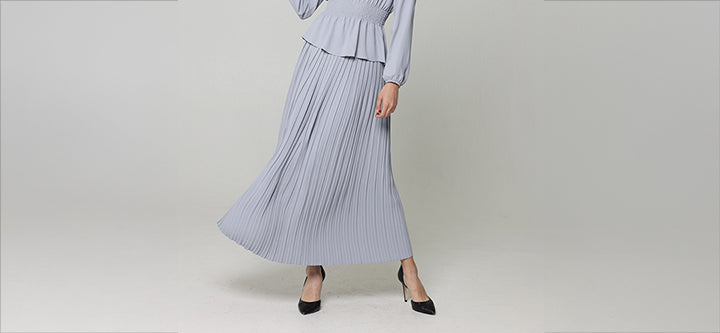
We lived in Yemen for part of my childhood, and Ammi became the unofficial seamstress for the women in our apartment building. Neighbors would bring her pictures of dresses they had seen in magazines and ask if she could make them something just like that.
Of course she could.
As a ten year old, I would walk with Ammi to the Souq al Markazi in Taiz. We would pull tangled lengths of fabric buried deep within fabric 'mountains', and pay for it by weight. I still remember being surrounded by those mountains; smells, colors and textures everywhere, while Ammi touched and examined every cloth with the confidence of someone who understood exactly what each one could become.
Then we'd walk home, and I'd see her bent over her sewing machine late into the night, turning those pieces of cloth into fashions for what sometimes felt like the entire apartment building.
She made dresses for the women and school uniforms for the kids. There were no online tutorials, downloadable patterns, or videos explaining every step. She looked at something, understood how it was constructed, and made it.
 Her sewing machine was almost an extension of her hands. She understood it so completely that she could take the entire machine apart and put it back together again. I can't think of many people today who would attempt that without first watching twelve YouTube videos and then calling customer service.
But sewing was only one of her talents.
Ammi could knit and crochet intricately patterned sweaters with such ease that it seemed as though her hands knew what to do without consulting her brain. I remember watching the needles click while she talked, listened, or watched something else. She could practically knit with her eyes closed, a talent she acquired in grade school, hands quietly knitting baby sweaters under her desk, so she could help her mother make ends meet.
Ammi could make something out of almost nothing. Scraps of fabric became dolls. Empty matchboxes became doll furniture. Things that most people would throw away became the beginning of an unexpected project, always beautiful. Looking back, I realize she was teaching me lessons I wouldn't understand until much later.
Creativity Is Not About Having More
We live in a world that constantly tells us we need something new. New clothes, new furniture, new gadgets, new everything.
Ammi came from a different philosophy. She looked at what she had and asked, What can I make with this?
There was creativity in that, but also resourcefulness. She didn't need perfect materials or ideal circumstances before she began. Leftover yarn could become a doll. A matchbox could become a tiny bed or dresser. A picture in a magazine could become a dress.
Perhaps that is one reason craftsmanship has always meant so much to me. I watched my mother create beauty with her own hands. She taught me that beauty doesn't begin in a store. It begins with imagination.
Real Skill Is Often Quiet
Ammi never made a great announcement about everything she could do.
She simply did it.
There was no personal brand attached to her abilities, no audience watching, no need for recognition. Women needed dresses, so she made dresses. Children needed uniforms, so she sewed uniforms. Something broke, so she repaired it, or turned the broken pieces into something else.
Her competence was simply part of everyday life.
I think about that often now because we sometimes confuse visibility with accomplishment. We assume that if something isn't photographed, posted, praised, or rewarded, perhaps it doesn't matter as much. But some of the most important work in the world has always happened quietly. And much if not most unrecognized work has been done by women.
They made clothes, cooked meals, stretched budgets, raised children, cared for relatives, repaired what was broken, and created beauty in their homes where nobody outside the family ever saw it.
Their names never appear in history books, but entire generations were built upon their labor.
She Never Asked for Much
Perhaps the thing I understand most clearly now is how little my mother ever asked for herself.
She gave. That was Ammi's language.
She gave her time, her skills, her energy, and whatever she had available. If someone needed something and she could provide it, she did. When you're young, you can easily mistake that kind of giving for something ordinary. Mothers do things for us every day, and children naturally assume they always will.
As kids we would refuse to eat until she sat with us and told us a story. And what a storyteller she was! We would be entertained with folk tales from her childhood, of golden elephants and magical frogs and ordinary village bumpkins. Ammi would sit patiently, her hands alternating, putting food in our mouths while her lips moved, our eyes wide, rapt with attention for what happened next in the story.
It is only now that I've started to fathom the cost, the immense sacrifice of all that giving.
Life has changed now.
Ammi is losing her memory.
Recently, she came to visit me from Canada. Somewhere along the way, the details became rearranged in her mind, and she thought that her seven hour journey had been on a long train.
There is something both tender and heartbreaking about hearing her tell the story. The woman who could once look at the complicated construction of a dress and intuit exactly how every piece fit together now sometimes struggles to piece together the details of her own day. The woman who could dismantle a sewing machine and confidently rebuild it loses track of things that once would have seemed impossibly simple.
Memory is a strange thing. We assume our lives are safely stored somewhere inside us, filed away and waiting whenever we want to revisit them. Then we discover how fragile those files are.
So now, perhaps, it is my turn to remember for her.
I remember the souq in Taiz.
I remember the colorful, tangled pile of fabric.
I remember the knitting needles moving without effort, the dolls made from scraps and tiny furniture made from matchboxes.
And I remember a woman who rarely asked, What will I get?
Only, What can I give?
As I've grown older, my definition of a remarkable life has changed. I used to think accomplishment had to be large and visible. But that's not true. Sometimes the quietest impact is the most profound, and it reverberates through generations.
My mother taught me that you don't need very much to create something beautiful. She taught me that competence is a form of independence, that generosity doesn't need an audience, and that the things we make with our hands can carry love long after we've forgotten who made them. A meaningful life is not measured only by what we accumulate. It is measured by what we leave in other people's hands, and in their hearts.
My mother spent a lifetime giving.
Now, as some of her memories begin to loosen their hold, I find myself holding them a little tighter.
For both of us.


So beautiful.Indeed -Paradise lies beneath a mothers feet.
Leave a comment